Pageviews past week

Showing posts with label Star Bradley. Show all posts

Tuesday, April 23, 2019

Unfinished Business


When they had finished eating, Jesus said to Simon Peter, “Simon son of John, do you love me more than these?”

“Yes, Lord,” he said, “you know that I love you.”

Jesus said, “Feed my lambs.”

Again Jesus said, “Simon son of John, do you love me?”

He answered, “Yes, Lord, you know that I love you.”

Jesus said, “Take care of my sheep.”

The third time he said to him, “Simon son of John, do you love me?”

Peter was hurt because Jesus asked him the third time, “Do you love me?” He said, “Lord, you know all things; you know that I love you.”

Jesus said, “Feed my sheep. Very truly I tell you, when you were younger you dressed yourself and went where you wanted; but when you are old you will stretch out your hands, and someone else will dress you and lead you where you do not want to go.” Jesus said this to indicate the kind of death by which Peter would glorify God. Then he said to him, “Follow me!”

Easter is the annual apex of Christian joy. Gathered with the largest crowds we’ll see this year, we shout, “He is risen!” and “He is risen indeed!” We sing praise before celebrating with feasting and fun for the little ones and then …

We go back to work. Back to the same old routine. Back to our unfinished business.

The story of Peter isn’t that different. Easter came. Jesus rose. Peter rejoiced. And when all the excitement died down, Peter went back to work. Back to his unfinished business.

Peter was a fisherman, but his unfinished business wasn’t fishing. He cast his net racked by guilt. In the hour of trial, when the Lord’s life was on the line, Peter denied knowing Jesus thrice.

Peter wasn’t expecting the Lord to come to his workplace that day. Jesus came anyway. He called to Peter from the shore, and Peter swam to him. Then, on the shore, Jesus and Peter talked about this unfinished business. 

It’s tempting to think Peter was right: that the unfinished business was the shame of his denial, that the Lord had to remove that by giving Peter the opportunity to thrice proclaim his love. But the truth is that guilt was removed by the cross. Those things that weighed Peter down came not from the reality of his standing before his Lord, but from his misperception thereof.

The unfinished business the Lord had in mind wasn’t finished on the shore that day. The true unfinished business was the feeding of the lambs, which symbolized Peter’s role in building up the church, caring for the body of believers, and spreading the good news of God’s grace.

Our unfinished business is much the same. Easter behind us, we must realize that the guilt of our sin is gone and that the Lord has work for us to do. It’s the same work he had for Peter: build up the Lord’s church, care for the body of believers, and spread the good news of God’s grace. 

Tuesday, April 9, 2019

The Seed of Life


It is sown a natural body, it is raised a spiritual body. If there is a natural body, there is also a spiritual body. So it is written: “The first man Adam became a living being”; the last Adam, a life-giving spirit.

Have you ever thought about what Adam looked like? Envision him.

Now think about the last baby you met. Did he or she look like the parents?

Probably so, at least in a broad sense. Boil it down and we all look the same - nose in the center of the face, two eyes above, a mouth below, legs at our waist and arms at our shoulders. We all act alike too. We eat, we sleep, we sin, we hate, we love.

The reality is universally observable: Produced life is remarkably similar to the producer(s). Fish produce fish, birds produce birds, and humans produce humans. There’s no mistaking one for the other.

So we understand how we are born in a natural sense, but how are people born in a spiritual sense?

Jesus says, “Very truly I tell you, no one can enter the kingdom of God unless they are born of water and the Spirit. Flesh gives birth to flesh, but the Spirit gives birth to spirit.” (John 3:5-6

This Spirit that gives birth to our spirit is the Spirit of Jesus Christ. Therefore, just as we are like our parents (and by derivation Adam) in a physical sense, we are like Jesus Christ in a spiritual sense. Our spiritual lives reflect his character as defined in Galatians 5: love, joy, peace, patience, kindness, goodness, faithfulness, gentleness, and self-control. And more than that, just as our natural bodies are mortal like Adam’s, our spiritual bodies are immortal like Christ’s!

“For as in Adam all die, so in Christ all will be made alive.” (1 Corinthians 15:22)

You are alive in a natural sense, but are you born again of the Spirit of Jesus Christ? And has this second birth into immortality changed the way you live your mortal life?

Tuesday, March 12, 2019

Leaning on the Learning Tree


Those who live according to the flesh have their minds set on what the flesh desires; but those who live in accordance with the Spirit have their minds set on what the Spirit desires. The mind governed by the flesh is death, but the mind governed by the Spirit is life and peace. The mind governed by the flesh is hostile to God; it does not submit to God’s law, nor can it do so. Those who are in the realm of the flesh cannot please God.

When I was in school, I didn’t read the same book twice. I learned addition and moved on to multiplication. I learned spelling and moved on to grammar. One thing built upon another, and all was forever absorbed into my sponge-like mind. Though I’ve gone decades without seeing my teachers or reading their books, I can still multiply (even without my smartphone) and i donut right lik thes

I wish my battle with sin could be like my education. But it’s not.

The Bible teaches me what is right and good. I understand and agree. I want to live like that. Yet somehow I still sin. I do what I know is wrong even though I want to do what is right. As the Bible says, “Although I want to do good, evil is right there with me. For in my inner being I delight in God’s law; but I see another law at work in me, waging war against the law of my mind and making me a prisoner of the law of sin at work within me.” (Romans 7:21-23)

If I then cannot be free of sin by gaining knowledge or setting my will to the purpose, how can I be set free?

The answer lies in relationship with God (very different from knowledge of God). Through regular time reading the Bible, reflecting upon the Scriptures, praying, worshipping, and sharing in the fellowship of Christian community, we can be trained to recognize the voice of the Spirit and obey that voice as the governor of our mind. Without this regular contact, our knowledge of God will bend to our selfish will and sin will govern our lives.

As Jesus puts it, “I am the vine; you are the branches. If you remain in me and I in you, you will bear much fruit; apart from me you can do nothing.” (John 15:5)

Tuesday, February 26, 2019

Prove It!


The heavens declare the glory of God;
   the skies proclaim the work of his hands.
Day after day they pour forth speech;
   night after night they reveal knowledge.
They have no speech, they use no words;
   no sound is heard from them.
Yet their voice goes out into all the earth,
   their words to the ends of the world.
In the heavens God has pitched a tent for the sun.
It is like a bridegroom coming out of his chamber,
   like a champion rejoicing to run his course.
It rises at one end of the heavens
   and makes its circuit to the other;
   nothing is deprived of its warmth.

I am an inquisitive person. I rarely take things at face value; I almost always demand proof. I investigate. I interrogate. It seems like I’m arguing, but I’m actually testing. I want to know if the things people say are true and I want to know why they’re true. A lot of Christians shy away from talking about God because they’re intimidated by people like me. God has never been intimidated in the least.

I questioned the existence of God once. Not out of frustration or bitterness, but on a calm, rational, deeply intellectual level. I dismissed as opinion everything I’d been told was fact about God, and I opened my mind to every possibility. I studied the major world religions, read tomes of philosophy, and took many long, reflective walks in the park.

It took seven years of God revealing his many disputed characteristics to me before I became a Christian again, but God almost immediately answered my core question: Does God exist? 

I often used to walk out on a bridge in the park and stare down at a stream and look up at the sky and listen to the water fall over the rocks and contemplate the heavens and … I think I always knew that God exists in some form because the proof of the creator is in the creation.

As it is written in Romans 1:20, “For since the creation of the world God’s invisible qualities—his eternal power and divine nature—have been clearly seen, being understood from what has been made, so that people are without excuse.”

Tuesday, February 12, 2019

Waiting … Anticipating … Rejoicing


“Shout and be glad, Daughter Zion. For I am coming, and I will live among you,” declares the Lord. “Many nations will be joined with the Lord in that day and will become my people. I will live among you and you will know that the Lord Almighty has sent me to you. The Lord will inherit Judah as his portion in the holy land and will again choose Jerusalem. Be still before the Lord, all mankind, because he has roused himself from his holy dwelling.”
Zechariah 2:10-13

Zechariah penned these words inspired by the Holy Spirit an estimated 470-480 years before the coming of the Messiah. If I were Zechariah, I think I would’ve asked a few follow-up questions, maybe tried to pin God down on a date for the fulfillment of all these promises.

Wouldn’t you?

“Will you marry me?” A high-pitched squeal. “Oh, of course, you hunky stud! This is the happiest day of my life!” Six months go by. “When are we getting married?” “But about that day or hour no one knows, not even the angels in Heaven …” (O the trials of the bride of Christ!)

And so we wait. And wait. And wait. For the fulfillment of promises. For the return of Christ. For the marriage supper of the Lamb. For the perfection of Heaven. 

But here’s the interesting thing about this text: It tells us to shout and be glad (present tense - now!) because he is coming and will live among us (future tense). The wait God gives us is not one of drudgery, but one of anticipation and excitement.  

So shout for joy, my friend! For you are loved by the God who created the heavens and the earth and the sea and everything in them! You are the bride of Christ, and he is coming for you! Every tear shall be wiped from your eye, every provision shall be made for you, and you will dwell in the presence of God forever!

Rejoice today in your tomorrow!

Tuesday, January 29, 2019

The Woes of Middle Management


For I know how rebellious and stiff-necked you are. If you have been rebellious against the LORD while I am still alive and with you, how much more will you rebel after I die!

Moses chose some harsh words for his farewell address to the Israelites he had been leading for over forty years. Perhaps justifiably so. The Israelites hadn’t stopped complaining since they left Egypt. They were idolaters who built a golden calf to worship while Moses was off receiving the stone tablets of God’s covenant law (Exodus 32). They were rebels constantly attacking Moses’s leadership, even taking up the cause of Korah after God miraculously opened the mouth of the earth to swallow him and his fellow rebels alive (Numbers 16). 

Yes, Moses had his reasons to rebuke the Israelites, but let’s dig deeper into the context, shall we? 

You see, Moses was only middle management. God was in charge, and Moses had just come from the tent of meeting where he and Joshua had been summoned to hear the will of the boss. God, speaking in a pillar of cloud, expressed the same sentiment toward the Israelites that Moses parrotted and then commissioned Joshua as their new leader, for God was about to bring the Israelites into the promised land. By God’s will, Moses would never experience it. He would only view the promised land from a nearby mountain just before his death. Why? Moses was being punished for his own rebellion against God (Numbers 20).

On that day, Moses was both the recipient and proclaimer of God’s righteous judgment. He climbed Mount Nebo and died, never to be heard from again … 

Until the transfiguration! There, again atop a mountain, Moses beheld one whose face shone like the sun, whose clothes were white as light (Matthew 17). Moses never entered the promised land, but he talked with the promised one, the perfect lamb of God, the Messiah who through his death and resurrection would free us all from God’s righteous judgment.


Tuesday, January 15, 2019

First Words

So in Christ Jesus you are all children of God through faith, for all of you who were baptized into Christ have clothed yourselves with Christ.
Galatians 3:26-27


Do you remember the first words you spoke as a baby? Probably not, but odds are your parents do. According to a recent survey, 87% of you began speaking with some variation of “dada” or “mama.” The third most common word was some variation of “Hiya!” 

First words are important. They establish relationship. They greet and welcome. They set the course for what is to follow.

And so it continues into adulthood. “Good morning, mom!” “Welcome home, honey!” “Glad to see you, brother!” “How can I help you, sir?” “What do you want?!!!” “Where have you been?!!!” “Excuse me, in what aisle can I find the aspirin?” 

Every time you see someone, you exchange first words, for better or for worse, and the course of your interaction is set. When we pray to our God, it is no different.

My first prayer each day always begins with these words: “Heavenly Father, Sovereign Lord, Holy Spirit ... Thank you for this new day of your creation. Your grace and your mercy are fresh every morning.”

I love these words. They identify my God as triune: my father, my lord, and my guiding spirit. When I give thanks, my heart opens to receive what God has prepared for me on this new day. In recalling his grace and his mercy, I am freed from my past sins and clothed again with the light of Christ. As a shower cleans the body, so these words clean my soul. 

What are your first words for God when you wake up in the morning?

Monday, December 3, 2018

Zechariah's Unbelief

Luke 1:18-20

A decade ago, I dreamed of having many children—each one unique in the interests they would share with me, the activities we could do together, the joy they would bring to my life. But I have struggled in romance, and with each passing year my dreams get smaller, my hope dwindles a little more.

One of my favorite holiday traditions is watching “Rudolph the Red-Nosed Reindeer”. I enjoy the innocent love story between Rudolph and Clarice, and I hope a little more when they sing, “There’s always tomorrow for dreams to come true.” Then, the misfit toys depress me when they think they’ve been forgotten and cry out in despair, “I haven’t any dreams left to dream!” In spite of their hopelessness, Santa comes to turn their despair to joy by bringing children into their lives.

For many, the holidays are more a painful reminder of what we lack than a joyful celebration. Some of our longings will always be longings; others are felt for only a time. One day, like Zechariah, we may be awed by the plans God has made for us. We can trust that God will fulfill His promise at the proper time.

QUESTIONS:

1. What do you long for this holiday season?

2. What longings of your past is God granting in your present?

PRAYER:

Lord, I trust Your plans for me—plans to prosper me and not to harm me, plans to give me hope and a future.

Star Bradley

Tuesday, November 27, 2018

#GivingTuesday


Today is Giving Tuesday, a unique phenomenon to the decade in which we live whereby we wrap up the first week of holiday shopping with a day of giving to our favorite non-profits. Since its inception in 2012, Giving Tuesday has grown exponentially, many years almost doubling the estimated total donations year-over-year. 

The numbers don’t lie: Giving is contagious.

In today’s scripture reading, the psalmist reflects on the many things God has given him. I’ve caught the fever, so let me do likewise. 

God has given me mercy by forgiving my sins through the atoning death of Jesus Christ. He has given me new life by raising Christ from the dead. He has given me companionship, wisdom, and guidance through the gift of the Holy Spirit. He has provided for my material needs, surrounded me with the family of believers, and begun restoring all that is broken within me.

Because of his great love for us all, God offers you these same gifts.

How then should we respond?

Let us today give forgiveness to those who have wronged us. Let us tell them about Christ that they may experience new life. Let us love one another, making time for each other, imparting our wisdom to each other, and guiding each other through the difficulties of life. Let us provide for the material needs of our fellow man, accept strangers as family, and lovingly spur one another on toward righteous living. 

Let us freely give as God has given to us.

Tuesday, November 13, 2018

Why, God? Why?


As a young man, I had great difficulty reconciling the God who sacrificed his only son for the sins of the world with the God who judged his chosen people through exile, slavery, rape, and execution. I much preferred the former and oft asked of the latter, “Why, God? Why?”

Why did you hand the people you created over to such cruelty and suffering? Would you do the same to me or to the people I love?

I thought he would, and perhaps justifiably so. 1 Peter 3:12 says, “The eyes of the Lord are on the righteous and his ears are attentive to their prayer, but the face of the Lord is against those who do evil.” 

I have done evil by breaking God’s commandments, as have my loved ones, as had God’s chosen people. In fact, Romans 3:12 says, “All have turned away, they have together become worthless; there is no one who does good, not even one.”

Do we then deserve to be spared from the evil of others if we ourselves do not do good?

Perhaps, then, we should question not the God who judges, but the God who shows mercy.

Did God not drown the world in the time of Noah? Burn to ashes the cities of Sodom and Gomorrah? Has he not reserved the present heavens and earth for destruction by fire? (2 Peter 2:4-6, 3:10-11)

Why, then, should Jesus come into the world that whoever believes in him shall not perish but have eternal life? (John 3:16)

Because we’re sorry? Because we repented? Because we’re going to try harder and do better?

No. The Lord says, “But for the sake of my name …” (Ezekiel 20:9)

The name (or reputation) of God. That’s why the Israelites were delivered from slavery in Egypt, that’s why they were returned from exile in Babylon, and that’s why Christ died for the sins of the world. Because God’s name is synonymous with love, mercy, and grace.

In Ephesians 2:4-5, Paul puts it like this: “Because of his great love for us, God, who is rich in mercy, made us alive with Christ even when we were dead in transgressions—it is by grace you have been saved.”

Tuesday, October 16, 2018

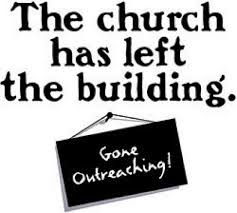
The Church Has Left the Building


Many of us struggle with sharing our faith. We don’t want to be seen as pushy; we’re afraid of rejection; and we feel unqualified to answer the tough questions others may challenge us with.

If you have these fears, I hope you can be encouraged by a few of my stories.

During a recent business lunch, I was asked why I became a real estate agent. I explained that I’m a follower of Jesus, sought his guidance, and felt like he was leading me into this career. The transition was difficult, but God blessed it. My title affiliate responded by talking about difficult transitions in her career and began to see how God’s hand was at work in her life too.

Another time I briefly met with a client on a Sunday afternoon. Certain that I had a busy day of selling ahead of me, he was surprised to hear that I was spending the afternoon volunteering at a picnic for incoming international students. He opened up about how he had been burned in the past by abusers of church-run charities. I encouraged him to look past the people who take advantage and consider those who are helped.

Finally, as I was exiting the hospital this month, I was confronted by a young man begging for a ride to his broken down car. Many people, exercising reasonable caution, had refused to help him and he was exhausted from walking. I felt secure enough in the situation to give him a ride, and he was very grateful. He asked who I was visiting at the hospital. I told him it was a friend I knew from Bible study, and he began to discuss his rough upbringing and eventual connection to the Lord. I was the help God wanted to send him that day.

None of these stories climax with the sinner’s prayer, but in each one someone was pointed toward the Lord because I am in an authentic relationship with Jesus Christ, I look for natural opportunities to talk about that relationship, and I listen for a response. That last part is key. Listening is caring. Trade listening for arguing and conflict will come, but trade arguing for caring and the Spirit will come.

Tuesday, October 2, 2018

I Once Was Lost, but Now Am Found


I spent seven years as a lost sheep. Separated from the flock of the Lord’s people and from the Good Shepherd himself, I wandered through life alone. I was very self-reliant then. Proud too. I pushed people away, refused help, and tried to make it on my own. I failed miserably.

When my Shepherd found me, I was deeply broken. I had no friends. I had wounded my family through years of rebellion and separation. I was dissatisfied with every worldly treasure. My life felt meaningless, and I had little hope for the future.

“I will bind up the injured and strengthen the weak, but the sleek and the strong I will destroy,” promises the Lord. (Ezekiel 34:16)

I used to think I was sleek and strong -- I was doomed to destruction. But when I encountered the Good Shepherd, I realized that I was weak and injured and that he wanted to heal me. All he needed was my submission.

The Good Shepherd changed my life. I have friends now. Real friends. Friends that accept me for who I am and genuinely care about me. My relationship with my family is being restored. I am filled with hope and satisfied with the provisions the Good Shepherd makes for me each day.

Sometimes I still wander … drift away on the path of pride or self-reliance or solitude. But the Good Shepherd chases me, catches me, and carries me back home, to the good pasture of life with his people, life in his care. He is true to who he says he is and what he says he will do. As it is written in Proverbs (and quoted in 1 Peter and James), “God resists the proud, but gives grace to the humble.”

Tuesday, September 18, 2018

Thou Shalt Not Judge … Never, Ever, Ever!


1Do not judge, or you too will be judged.

Very popular, very acceptable. I’ll do what I want. You’ll do what you want. Neither of us will dare correct the other or insinuate that one (or both) of us is a sinner. 

2For in the same way you judge others, you will be judged, and with the measure you use, it will be measured to you.

So if I ignore everyone else’s sin, then they’ll have to ignore my sin. Or else … the judgment of God! 

3Why do you look at the speck of sawdust in your brother’s eye and pay no attention to the plank in your own eye?

Huh? My brother is perfect the way he is. I do not judge him. And what is this plank of which you speak, Jesus?

4How can you say to your brother, ‘Let me take the speck out of your eye,’ when all the time there is a plank in your own eye? 

What speck? What plank? We’re perfect the way we are. Where are you going with this, Jesus?!

5You hypocrite, first take the plank out of your own eye, and then you will see clearly to remove the speck from your brother’s eye.

And there’s the issue! We were never called to ignore sin in our own lives or each other’s lives. Quite to the contrary, the Scriptures read: “I urge you to live a life worthy of the calling you have received,” (Eph 4:1) and, “If someone is caught in a sin, you who live by the Spirit should restore that person gently.” (Gal 6:1)

We are called to soberly evaluate our sin, repent, and gently restore our brothers and sisters in Christ. Are you doing this?

Tuesday, September 4, 2018

A Statistical Analysis of Greed


I’ve seen many Christian discussions of greed derailed by a prevailing tendency among us to define the rich as only those who have more money than ourselves, thereby absolving everyone but Jeff Bezos of this terrible sin of greed. 

Perhaps a more rational approach to defining greed would be a statistical analysis of how much wealth we have hoarded for ourselves compared to national medians, so I present the following chart which divides US households into five equal segments and presents the median net worth of each. (Net worth is the sum of home equity, savings, investments, etc; not annual income). Let’s define the segments as follows: really poor (red), poor (green), average (purple), rich (blue), really rich (orange). Find yourself on the chart.


Ok, now find where you would like to be on the chart.


If you would like to be in the orange or blue bar, you have a problem with greed. You wish to have significantly more wealth than the average American, perhaps even feel you need significantly more wealth than the average American. Your self-worth might be tied at least in part to your wealth, and you are in danger, according to Paul, of falling into temptation and a trap and into many foolish and harmful desires that plunge people into ruin and destruction.

Take it from me. I came to Christ as someone living in the orange bar and thirsting for greater wealth than what was even on the chart. The Lord confronted me with my sin by taking a lot of my wealth away, which at first seemed a curse but eventually proved a blessing as God developed in me the sense of godliness with contentment that Paul calls great gain.

Do you have food and clothing? Do you have the Spirit of God? If yes, then you have all you need.


*Chart taken from the U.S. Census Bureau, Survey of Income and Program Participation, 2008 Panel, Wave 10 - released in 2013 and dated as 2011

Tuesday, August 21, 2018

Imitation Is the Sincerest Form of Holiness


BE HOLY, FOR I AM HOLY.

The command seems so lofty. 

Me, holy? No one is righteous, not even one. I confess I am a sinner. I live by grace. For I do not do the good I want to do, but the evil I do not want to do—this I keep on doing. I am unholy, sold as a slave to sin, but his grace abounds.

Now that sounds a little more like the Christians I know. 

But let us consider what the Bible says about this lofty holiness. 

The prophecy: “I will put my Spirit in you and move you to follow my decrees and be careful to keep my laws.” (Ezekiel 36:27)

Christ’s promise: “But very truly I tell you, it is for your good that I am going away. Unless I go away, the Advocate will not come to you; but if I go, I will send him to you.” (John 16:7)

Prophecy and promise fulfilled: “You, however, are not in the realm of the flesh but are in the realm of the Spirit, if indeed the Spirit of God lives in you.” (Romans 8:9)

Result: “His divine power has given us everything we need for a godly life through our knowledge of him who called us by his own glory and goodness.” (2 Peter 1:3)

Therefore, we are not a defeated people, powerless against our base and sinful desires, but we who have received the Holy Spirit are a redeemed and victorious people fully capable of fulfilling the command to be holy as God is holy.

Yes, we are saved by grace, but saved for a purpose: to replicate his holiness.

Tuesday, August 7, 2018

Who Is Your Master?


America is the land of the free. We believe what we want; we say what we want; we do what we want. We are all independent, bound to no master! Or so we think.

2 Peter 2:19 says that all people are slaves to whatever has mastered them. The truth is easy to see in the life of a drug addict or a youth madly in love. Everything must be given to obtain that which has captured the fascination of the mind and the passion of the heart. We just can’t control ourselves. We have to have it.

So what is your it? What has mastered you?

Wealth? Personal accomplishment? Love of spouse, child, or parent? Your reputation for holiness built upon the sins you hide? Escapism through alcohol, through television, through work that doesn’t even need to be done?

Are you a slave unto sin?

We all used to be. “At one time we too were foolish, disobedient, deceived and enslaved by all kinds of passions and pleasures.” (Titus 3:3

Some of us still are. “We know that the law is spiritual; but I am unspiritual, sold as a slave to sin. I do not understand what I do. For what I want to do I do not do, but what I hate I do.” (Romans 7:14-15)

And some of us aren’t anymore. “You have been set free from sin and have become slaves to righteousness.” (Romans 6:18)

Feel like you’re caught in between? Remember the words Jesus spoke in Matthew 6:24, “No one can serve two masters. Either you will hate the one and love the other, or you will be devoted to the one and despise the other.”

“Therefore, let us throw off everything that hinders and the sin that so easily entangles. And let us run with perseverance the race marked out for us, fixing our eyes on Jesus, the pioneer and perfecter of faith.” (Hebrews 12:1-2)

Tuesday, July 24, 2018

Dead or Alive: Who Can Tell?


My grandfather is dead. Physically dead. Embalmed, buried, resting under a tombstone. If I dug him up, heaved him over my shoulder, and the two of us came to visit you, would you have a hard time telling who’s alive and who’s dead?

If you can see, smell, touch, or hear, then no. There’s a big difference between alive and dead!

Ephesians 2 says that we were dead in our sins, gratifying the cravings of our flesh, when God made us alive with Christ. Spiritually dead. Spiritually alive. Shouldn’t there be a big difference?

Yet how often we hear, “You’re a Christian? I’ve known you for years. I didn’t know you were a Christian!” “Yep, go to church every Sunday. Don’t feel the need to broadcast it, though. It’s more of a personal thing for me.”

We are physically alive. We don’t need to broadcast it. It’s not a personal thing. We’re alive. You see us and you know.

We who have been saved by God’s grace are spiritually alive in Christ. When people see us, they should know.

Yet often they don’t. Why is that? Because we still live much of our lives gratifying the cravings of our flesh, following our selfish desires and caring nothing for the desires of God. Sure, we believe in Christ and want salvation and blessings, but our minds are set on ourselves, not on what the Spirit desires. We don’t look different because we aren’t different. If the mind governed by the flesh is death, we’re just dead people being propped up by our church friends and made to look alive.

Do not conform to the pattern of this world, but be transformed by the renewing of your mind. Then you will be able to test and approve what God’s will is—his good, pleasing and perfect will. (Romans 12:2)

Follow that will—the will of God, the desires of the Spirit—and you will appear very alive indeed!

Tuesday, July 10, 2018

Who Is Jesus?


Who is Jesus?

Some say he is a fictional character. Others, that he existed but very little written about him is true. Some think his sayings are true; he was a wise teacher, but not a miracle worker. Still others, that he was a prophet, a way to relationship with God—one of many valid paths.

I say he is who he says he is: “I am the way and the truth and the life. No one comes to the Father except through me.” (John 14:6) And who Peter says he is: “the Messiah, the Son of the living God.” (Matt 16:16)

Ever wonder how so many of Jesus’s followers could hear his words, see his miracles, and still get it wrong?

Ever wonder how so many people in your own life could see the Spirit’s work in you, hear your teaching about Jesus, receive the love you give them from the Father, and still not believe?

Maybe if I studied more apologetics, phrased things in a more culturally relevant way, we think to ourselves. Maybe if I loved better or tricked them into church with a bait-and-switch promise of free food, fun games, or great prizes!

And then we hear the words of Christ and realize that even we still have it wrong. As Jesus said to Peter, “This was not revealed to you by flesh and blood, but by my Father in heaven.” (Matt 16:17)

Have a friend or family member who doesn’t know who Jesus is? Pray for them. Your logic and love cannot save them; only God can save them.


Tuesday, June 26, 2018

Lost Treasure


Few things were more devastating to the ancient Israelites than a swarm of locusts. Farmers who had invested months of labor and spent many evenings gazing upon their fields at what was certain to be an abundant harvest were in moments brought to tears as they watched their toil come to nothing, their families reduced to poverty and probable starvation. 

This is what will become of the treasures of the kingdoms of this world when the God of justice makes his power known.

Will you be among those suffering great loss on that day?

Seriously, consider it. 1 Corinthians 3 says that those who build on the foundation of Christ will have their work tested by fire. Build wisely, receive a reward; build foolishly, suffer great loss. Yes, all in Christ will pass into life, but some as ones escaping through the flames.

In Luke 12:15, Jesus warns us, “Watch out! Be on your guard against all kinds of greed; life does not consist in an abundance of possessions.” He goes on to tell a parable about a rich man who stored up his wealth thinking he would have many years of leisure to enjoy it only for God to prematurely take his life, separating him forever from the fruit of his labors.

I too once lived like this man, working hard to earn more and more money, saving and investing, only to see much of my wealth wiped out by a sudden reverse in the stock market. My efforts felt so futile then, but I learned the wisdom in Christ’s instruction: “Do not store up for yourselves treasures on earth, where moths and vermin destroy, and where thieves break in and steal. But store up for yourselves treasures in heaven.” (Matthew 6:19-20)

Tuesday, June 12, 2018

The Good Life


What do you picture when I speak of the good life? Let’s weigh some common responses against the example of Paul and the words of Christ. 

Beautiful beach sunset? Paul writes from prison. Happy to be there because his captivity is advancing the gospel. (Phil 1:12-18)

Attractive spouse? Paul is single and content to be so. A married person divides attention, seeking to please both God and spouse. The unmarried person is completely focused on how he can please the Lord. (1 Cor 7:7, 32-35)

Great wealth? Christ says, “Life does not consist in an abundance of possessions,” (Luke 12:15) and, “It is easier for a camel to go through the eye of a needle than for someone who is rich to enter the kingdom of God.” (Mark 10:25)

Perfect health? Paul prayed for it. God said, “My grace is sufficient for you, for my power is made perfect in weakness.” (2 Cor 12:9)

Great accomplishments? “I consider everything a loss because of the surpassing worth of knowing Christ Jesus my Lord, for whose sake I have lost all things. I consider them garbage, that I may gain Christ.” (Phil 3:8)

Your many labors behind you? “If I am to go on living in the body, this will mean fruitful labor for me.” (Phil 1:22)

The love and praise of everyone you know? Jesus said, “Blessed are you when people insult you, persecute you and falsely say all kinds of evil against you because of me. Rejoice and be glad, because great is your reward in heaven.” (Matt 5:11-12)

Our reward in heaven: Isn’t that really the good life? For what eye has seen, what ear has heard, what mind has conceived of the good things God has prepared for those who love him? (1 Cor 2:9)